What brownfield structured cabling risk means for enterprise networks
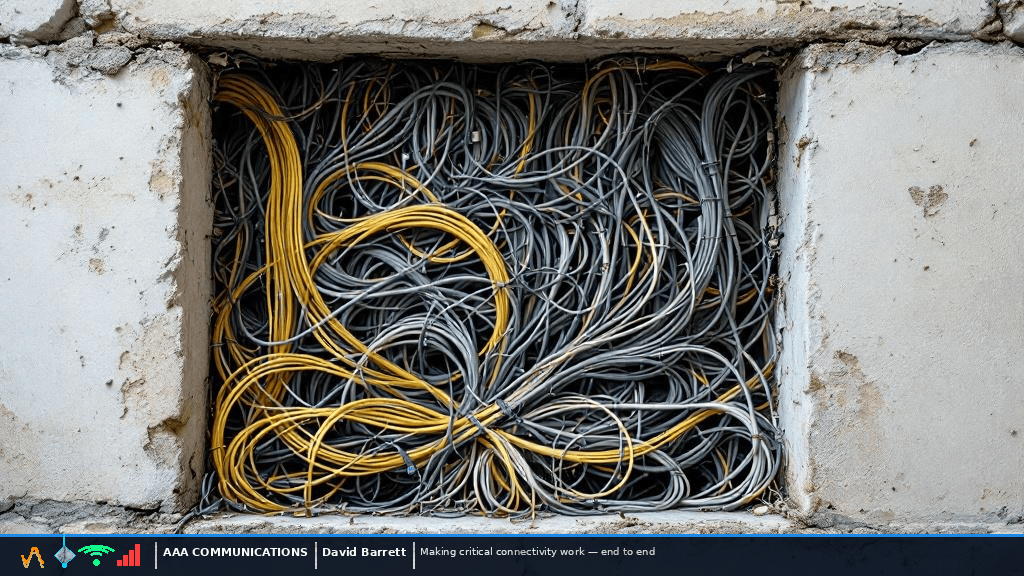
A brownfield network environment is one where infrastructure already exists. Cabling installed by multiple contractors across multiple projects, modified incrementally without consistent documentation, and certified to a standard that predates the technology it now carries. That is most enterprise networks in Australia.
The most dangerous assumption in enterprise network infrastructure: "The cabling has always worked, so it should be fine."
Why the original commissioning test is not enough
Initial certification at commissioning gives a pass or fail result under the conditions present at installation. It does not predict performance under higher power draw, increased bandwidth demand, or the incremental degradation that occurs through connector wear, movement, temperature cycling, and cumulative physical damage over time.
A copper run that passes Cat5e certification at installation may fail Cat6A performance testing years later when a PoE++ switch is deployed. A fibre link with insertion loss near the upper limit of the standard may perform at 1Gbps and fail at 10Gbps. The legacy network carries the load. The structured cabling underneath it was never tested against that load.
What a comprehensive brownfield audit uncovers
Visual inspection identifies obvious physical damage and labelling gaps. It does not surface marginal performance issues or the compliance gaps that only certified testing reveals. Comprehensive brownfield cabling audits across Australia regularly uncover copper runs that fail certification under the standard required for the active equipment being deployed; fibre links with insertion loss exceeding the link budget at target data rates; undocumented structured cabling that cannot be traced; and patch panel ports with damaged terminations that appear intact visually.

In most brownfield audit engagements, between 20 and 40 percent of tested infrastructure has at least one performance issue that visual inspection alone would not have found.
LAN remediation scoped to evidence, not assumption
The output of a brownfield audit is a prioritised findings report. LAN remediation is then scoped to what the evidence demands, not to a blanket structured cabling upgrade across the site. That distinction matters for cost, disruption, and the defensibility of the scope. Infrastructure that passes certification is left in place. Infrastructure that fails is replaced or remediated to an identified standard, Cat6A or fibre as appropriate, with updated as-built documentation on completion.
Frequently asked questions
How do I know if my environment qualifies as brownfield? If your cabling was installed more than five years ago, has been modified by multiple contractors, or lacks current certification records, it qualifies. Most enterprise environments in Australia do.
Do you need to take ports offline to test them? Certification testing requires brief disconnection during the test, typically under two minutes per port. We schedule around your operational requirements.
What happens after the audit? You receive a prioritised findings report, updated as-built documentation, and a LAN remediation scope limited to infrastructure that is actually constraining performance or resilience.